
Chest Muscles
The chest muscles play a central role in many upper body movements, yet they are often misunderstood. Many people train the chest by copying exercises without understanding what the chest muscles actually do and how they contribute to movement.
This page explains the basic anatomy of the chest muscles, their function, and why they matter in bodybuilding.
This content is educational, not medical advice.
What Are the Chest Muscles?
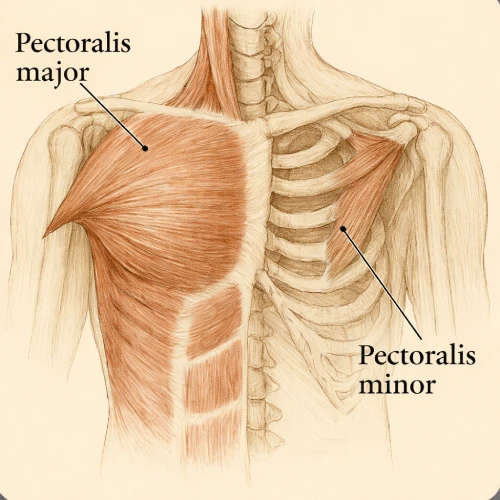
In bodybuilding, the chest mainly refers to the pectoralis major and the smaller pectoralis minor beneath it.
The pectoralis major is the large, fan-shaped muscle visible on the front of the torso. It connects the upper arm to the rib cage and sternum. The pectoralis minor sits underneath and plays a supporting role in shoulder movement and stability.
Most visible chest development comes from the pectoralis major.
What the Chest Muscles Do
The primary functions of the chest muscles are:
- Bringing the arms toward the body’s midline
- Assisting in pushing movements
- Contributing to shoulder movement and control
From an anatomical perspective, the chest muscles are most active when the arms move from open to closed positions, especially against resistance.
This explains why pressing and hugging-type motions tend to involve the chest strongly.
Why Chest Anatomy Matters in Training
Understanding chest anatomy helps explain why some movements feel more chest-focused than others.
Chest involvement depends on:
- Arm position relative to the torso
- Shoulder angle
- Range of motion
Small changes in position can shift effort toward the shoulders or arms. Anatomy explains these shifts without relying on cues or sensations alone.
The Chest Works With Other Muscles
Chest muscles do not work alone.
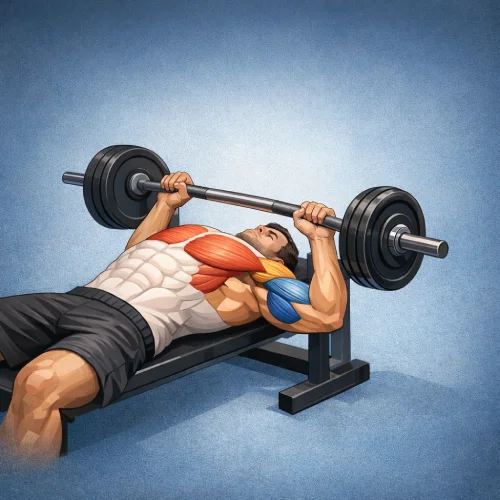
During most pressing movements:
- The shoulders assist with arm movement
- The triceps help extend the elbows
- Stabilizing muscles support the shoulder joint
This is why chest fatigue is sometimes accompanied by shoulder or arm fatigue. It reflects cooperation, not poor technique.
Upper, Middle, and Lower Chest Clarification
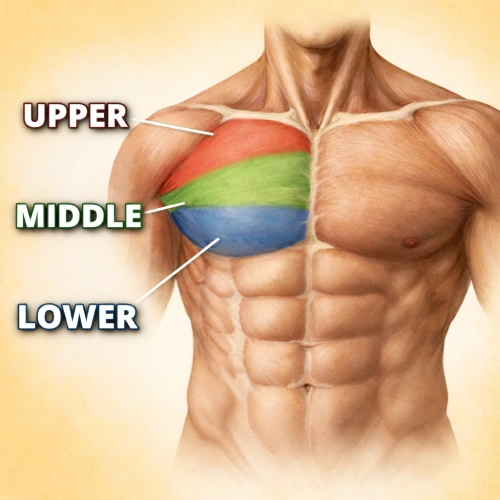
The chest is often divided into upper, middle, and lower sections. Anatomically, it is one muscle with different fiber directions, not separate muscles.
Different arm angles emphasize different fiber groups:
- Higher arm angles tend to involve upper fibers more
- Lower arm angles tend to involve lower fibers more
This is a matter of fiber orientation, not isolated muscles.
Common Chest Training Misunderstandings
One common misunderstanding is assuming that feeling the chest burn equals effective stimulation.
Another is believing that a single exercise can fully isolate the chest. Anatomy shows that most chest movements involve multiple muscles working together.
Understanding structure helps avoid chasing sensations instead of meaningful tension.
Mind Muscle Awareness and the Chest
The chest is one of the muscles people often struggle to feel.
This is normal. The chest does not flex or bend a joint as clearly as arms or legs. Awareness improves as understanding improves.
When you understand what the chest does, sensations become easier to interpret.
Why Chest Anatomy Deserves Attention
Without basic anatomical understanding, chest training often turns into repetition without intention.
Knowing:
- Where the chest attaches
- How it moves the arms
- How it cooperates with other muscles
creates better awareness and fewer misconceptions.
Chest muscles are not complicated, but they are often oversimplified.
Understanding their structure and function makes chest training clearer, calmer, and more consistent.If you want, the next logical continuation is Back Muscles, where anatomy becomes even more layered and misunderstood.