
Periodization Explained
Periodization is often reduced to calendar-based plans or rigid phases. In reality, it describes how training stress is organized over time to balance stimulus, fatigue, and adaptation. It is less about schedules and more about managing change.
Understanding periodization requires shifting focus from single workouts to patterns that unfold across weeks and months.
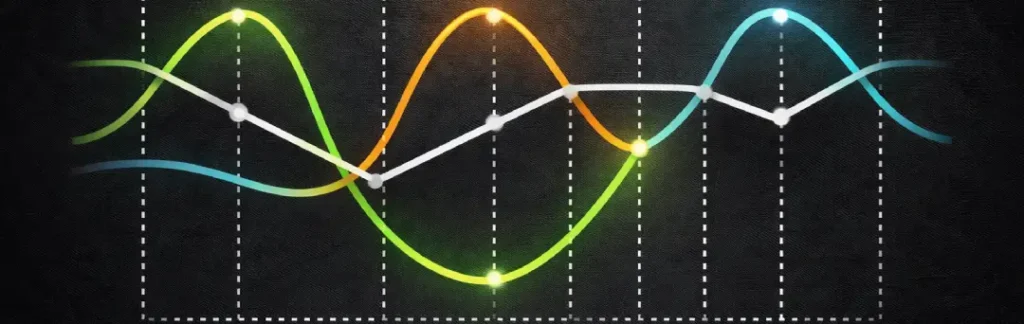
What periodization actually represents
At its core, periodization is a framework for distributing different types of stress across time. Rather than applying the same demands continuously, training variables are adjusted to emphasize certain qualities while allowing others to stabilize.
This approach reflects a simple principle: adaptation depends not only on stress, but on how that stress fluctuates relative to recovery capacity.
Why constant training looks productive but stalls
Repeating similar demands can feel productive because familiarity improves performance. However, as the body adapts, the same stimulus produces diminishing returns while fatigue accumulates.
Periodization addresses this by altering emphasis before stagnation becomes entrenched. The goal is not constant novelty, but strategic variation.
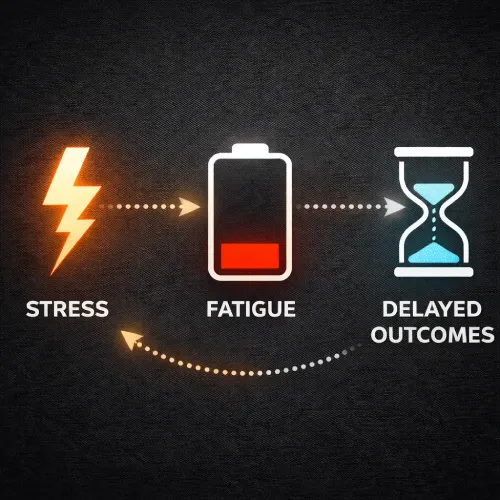
Stress, fatigue, and delayed outcomes
Training adaptations are delayed responses. Improvements often appear after stress has been reduced, not while it is being applied most aggressively.
Periodization acknowledges this delay by creating phases where fatigue is allowed to accumulate and phases where it is reduced. This separation clarifies which changes are driving progress and which are masking it.
Variation without randomness
Effective periodization does not rely on frequent, unstructured changes. Variation is purposeful and constrained. Each shift serves a reason related to managing load, effort, or recovery.
Random changes create noise. Structured variation creates contrast, making adaptations easier to recognize.
Individual response matters
Different individuals tolerate stress differently. Some adapt quickly to repeated demands, while others accumulate fatigue faster. Periodization provides a flexible framework that can accommodate these differences without requiring constant recalibration.
This flexibility explains why periodization is a concept rather than a single model.

Periodization as a lens, not a template
Viewing periodization as a fixed plan misses its intent. It is better understood as a way of thinking about training over time.
The guiding question is not “Which phase comes next?” but “What kind of stress is being emphasized now, and what is being allowed to recover?”
Periodization explains how training evolves across longer time horizons. It provides context for why emphasis shifts and why progress is rarely linear.
This perspective leads naturally into Training Blocks, where periods of focused stress are examined more closely, and into Plateau Management, where stagnation is interpreted through the lens of accumulated fatigue and adaptation.
This article is intended for educational purposes and should not be interpreted as medical or clinical guidance.
Scientific Sources
Issurin VB (2010). New horizons for the methodology and physiology of training periodization
https://pubmed.ncbi.nlm.nih.gov/20847704/
Kraemer WJ, Ratamess NA (2004). Fundamentals of resistance training: progression and exercise prescription
https://pubmed.ncbi.nlm.nih.gov/15320663/