
Shoulder Muscles
Shoulder muscles allow the arms to move freely through space, but that freedom comes with complexity. The shoulder joint is designed for mobility first, which is why shoulder training often feels unstable, technical, or inconsistent.
This page explains the basic anatomy of the shoulder muscles, what they do during training, and why understanding them matters in bodybuilding.
This content is educational, not medical advice.
What Muscles Make Up the Shoulders?
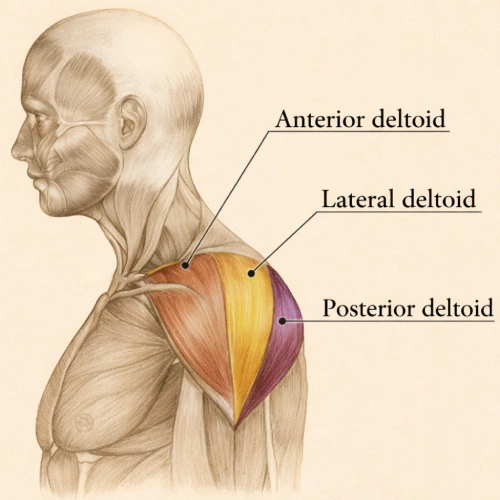
In bodybuilding, the shoulder area is mainly defined by the deltoid muscle, supported by smaller stabilizing muscles.
The deltoid has three main sections:
- Anterior deltoid – front of the shoulder
- Lateral deltoid – side of the shoulder
- Posterior deltoid – back of the shoulder
Beneath and around the deltoid lies the rotator cuff, a group of smaller muscles responsible for joint stability rather than visible size.
Most visible shoulder shape comes from the deltoid, but shoulder function depends on both groups working together.
What Shoulder Muscles Actually Do
The shoulders are responsible for:
- Raising the arms
- Moving the arms forward, sideways, and backward
- Stabilizing the arm during loaded movement
Unlike muscles that primarily bend or extend joints, shoulder muscles operate in multiple planes of motion. This is why shoulder exercises often feel more complex than chest or arm movements.
Why Shoulder Training Feels Unstable
The shoulder joint sacrifices stability for range of motion.
Anatomically:
- The joint socket is shallow
- Stability relies heavily on muscular control
- Small muscles work constantly to guide movement
Because of this, fatigue in stabilizing muscles can affect performance even when the larger muscles still feel capable. This explains why shoulder training quality often declines before full muscular exhaustion.
The Role of Each Deltoid Section
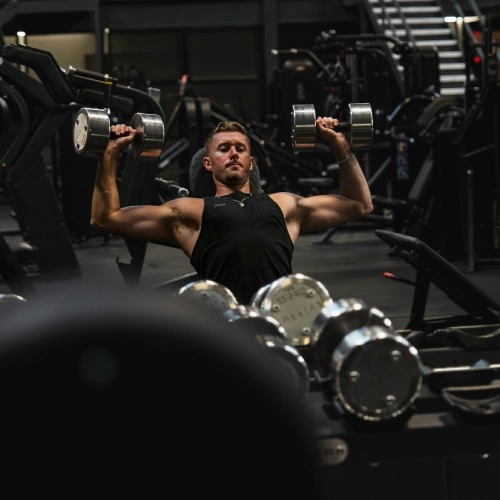
Each part of the deltoid contributes differently based on arm direction.
- Front deltoids are active when the arms move forward or upward
- Side deltoids contribute most when the arms move away from the body
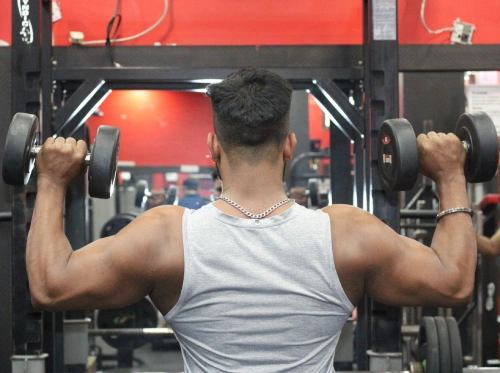
- Rear deltoids assist when the arms move backward and help control shoulder positioning
These sections are not separate muscles, but their fiber orientation causes different emphasis depending on movement.
Shoulders and Other Muscles Working Together
Shoulder movements rarely happen in isolation.
During most upper body exercises:
- Chest muscles assist in pushing
- Back muscles assist in pulling
- Arm muscles help control elbow movement
This overlap explains why shoulders often feel involved even when they are not the main target. Anatomy shows that this is cooperation, not imbalance by default.
Why Shoulder Anatomy Matters in Bodybuilding
Shoulders influence both appearance and performance.
Understanding shoulder anatomy helps explain:
- Why some movements feel shoulder dominant
- Why posture affects shoulder loading
- Why fatigue sometimes appears as loss of control rather than loss of strength
Without anatomical awareness, shoulder training often turns into guesswork or avoidance.
Awareness Over Sensation
Because shoulders rely heavily on stabilization, sensation can be misleading.
Not feeling a strong burn does not mean the shoulder muscles are inactive. Often, they are working continuously to control joint position rather than producing obvious movement.
Anatomy helps separate control work from effort work.
A Clear Way to Think About Shoulder Training
Instead of asking:
- “Why does this feel uncomfortable?”
A better question is:
- “Which muscles are responsible for guiding this movement?”
This shift reduces confusion and supports safer, more intentional training.
Shoulder muscles are complex by design.
Understanding their structure and role brings clarity to one of the most misunderstood areas of training.If you want, the next natural continuation is Arm Muscles, where movement becomes more straightforward but still easy to misinterpret.