
Weight vs Muscle Gain
In bodybuilding, body weight is often treated as progress itself. The scale goes up, so muscle must be increasing. In reality, weight change and muscle gain are related but not interchangeable. Understanding the difference is essential for interpreting progress accurately.
This content explains how body weight changes, how muscle gain actually occurs, and why these two do not always move together.
This content is educational, not medical advice.
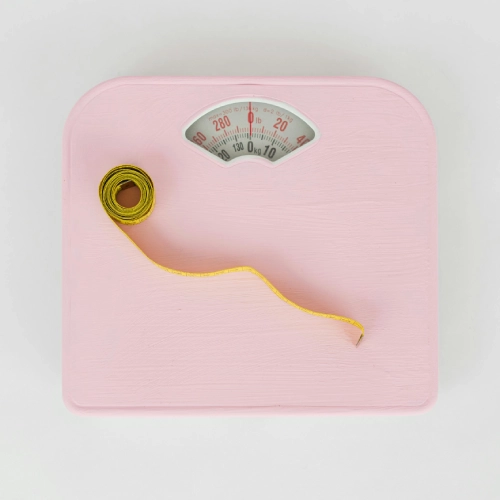
Why Scale Weight Is an Incomplete Signal
Body weight reflects everything in the body at once. It includes muscle, fat, water, glycogen, food content, and even short-term fluid shifts.
Because of this, changes on the scale can occur without meaningful changes in muscle tissue. Weight may increase due to:
- Water retention or glycogen storage
- Digestive contents
- Temporary inflammation from training
Likewise, muscle gain can occur without noticeable scale changes when fat mass decreases at the same time.
Muscle Gain Is a Tissue-Level Process
Muscle gain refers specifically to an increase in muscle tissue, not total mass. It occurs through repeated exposure to mechanical tension, followed by recovery and adaptation.
This process is gradual. Even under ideal conditions, increases in muscle tissue happen slowly compared to daily weight fluctuations. Research suggests that muscle hypertrophy accumulates over weeks and months, not days.
This difference in timescale is one reason scale weight often feels misleading.
Why Weight Gain Does Not Guarantee Muscle Gain
A common assumption is that gaining weight automatically means gaining muscle. While muscle gain often requires a surplus of energy, not all weight gained in a surplus becomes muscle.
Weight gain can include:
- Fat mass
- Water weight
- Structural changes unrelated to muscle
The presence of weight gain only indicates that intake exceeded expenditure. It does not specify how that energy was allocated.

When Muscle Gain Happens Without Weight Gain
It is possible to gain muscle while body weight remains stable. This typically occurs when increases in lean mass are offset by reductions in fat mass.
In these cases:
- Appearance may improve
- Strength may increase
- Scale weight remains unchanged
This is one reason visual changes and performance trends often provide clearer signals than the scale alone.
Interpreting Weight Changes Over Time
Short-term weight changes are rarely informative. Long-term patterns are more meaningful.
Looking at trends rather than single measurements helps distinguish between:
- Temporary fluctuations
- Gradual increases in total mass
- Periods of stability with underlying recomposition
Research indicates that body weight is best interpreted alongside other indicators rather than in isolation.
Why Bodybuilders Track More Than One Signal
Experienced trainees rarely rely on a single metric. Weight is often viewed as one data point among several.
Muscle gain becomes clearer when weight trends are considered together with:
- Visual changes
- Strength progression
- Training tolerance
This broader view reduces overreaction and supports more accurate interpretation of progress.
Weight change and muscle gain describe different things. Body weight reflects quantity, while muscle gain reflects composition. Understanding this distinction makes it easier to assess progress without attaching meaning to every fluctuation.
This way of thinking connects naturally with how physical change and measurement are discussed in Body Fat Percentage Explained and Measuring Progress Correctly.
This content is educational, not medical advice.
Scientific Sources
- Schoenfeld BJ (2010). The Mechanisms of Muscle Hypertrophy and Their Application to Resistance Training
https://pubmed.ncbi.nlm.nih.gov/20847704/ - Gallagher D, Heymsfield SB, Heo M, Jebb SA, Murgatroyd PR, Sakamoto Y (2000). Healthy Percentage Body Fat Ranges: An Approach for Developing Guidelines Based on Body Mass Index
https://pubmed.ncbi.nlm.nih.gov/10966886/