
Tendons & Connective Tissue
Tendons and connective tissue rarely get attention until something feels wrong. In bodybuilding, muscle adaptation often happens faster than the structures that support it, which is why connective tissue plays a quiet but critical role in long-term progress.
This content explains what tendons and connective tissue do, how they respond to training stress, and why their adaptation follows different rules than muscle tissue.
This content is educational, not medical advice.
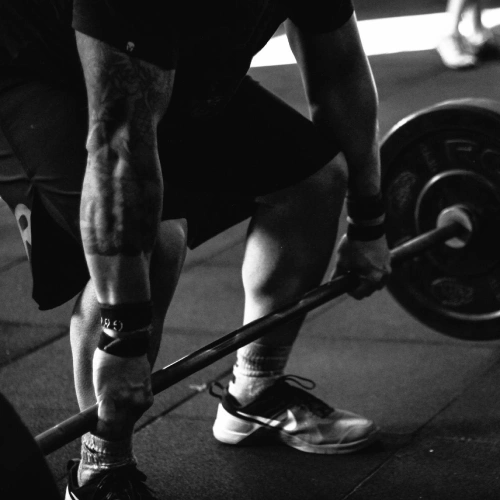
What Tendons and Connective Tissue Actually Do
Tendons connect muscle to bone, transferring force generated by muscle contraction into movement. Other connective tissues, such as ligaments and fascia, contribute to joint stability, force distribution, and structural integrity.
Unlike muscle:
- Connective tissue has lower blood supply
- Cellular turnover is slower
- Adaptation occurs over longer timeframes
This means connective tissue responds to training, but on a different schedule than muscle growth.
Why These Tissues Adapt More Slowly
Muscle tissue adapts relatively quickly through protein synthesis and changes in fiber size. Tendons and connective tissue adapt mainly through changes in collagen content, alignment, and stiffness.
Research suggests that:
- Collagen synthesis increases in response to mechanical loading
- Structural changes require repeated exposure over time
- Adaptation lags behind strength gains
This delay explains why strength can increase faster than tissue tolerance, especially in motivated trainees.
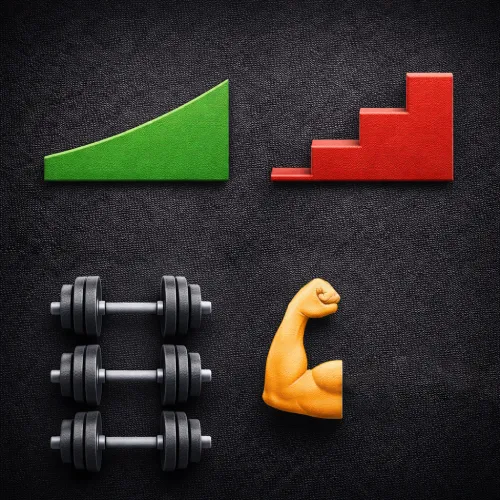
The Relationship Between Load and Tissue Tolerance
Connective tissue responds best to consistent, repeatable loading rather than sudden spikes.
Problems often arise when:
- Training volume increases rapidly
- Load progression outpaces tissue adaptation
- Recovery between high-stress sessions is insufficient
In these situations, muscles may feel capable while connective tissue becomes the limiting factor.
Why Tendon Discomfort Is Often Subtle at First
Unlike acute muscle strain, connective tissue stress often develops gradually.
Early signs may include:
- Stiffness rather than sharp pain
- Discomfort that improves with movement
- Sensations that fluctuate rather than escalate
Because these signals are subtle, they are often ignored until tolerance is exceeded.
Strength Without Structural Readiness
One of the most common mismatches in bodybuilding is increased strength without corresponding connective tissue readiness.
This mismatch can occur when:
- Neural adaptations drive rapid strength gains
- Muscles hypertrophy faster than supporting tissues
- Training intensity increases before tissue tolerance catches up
Understanding this gap helps explain why discomfort sometimes appears even when technique feels solid.

Connective Tissue as a Limiting Factor, Not a Weakness
Connective tissue limits performance not because it is fragile, but because it adapts conservatively.
This conservative adaptation:
- Protects joints and structures
- Encourages gradual exposure
- Supports long-term resilience
Viewing connective tissue as a pacing system rather than a vulnerability shifts how training stress is interpreted.
Why Long-Term Progress Depends on Tissue Health
Sustainable bodybuilding progress depends on the ability to apply stress repeatedly over long periods. Connective tissue health determines how often and how consistently that stress can be applied.
This becomes especially relevant as training volume, intensity, and specialization increase over time.
Understanding how tendons and connective tissue respond to load fits naturally with how joint discomfort is interpreted in Joint Pain in Training and how accumulated stress is managed in Rest & Recovery.
This content is educational, not medical advice.
Scientific Sources
Khan KM, Scott A. (2009). Mechanotherapy: How Physical Therapists’ Prescription of Exercise Promotes Tissue Repair.
https://pubmed.ncbi.nlm.nih.gov/19244270/