
Arm Muscles
Arm muscles are often the most visible part of bodybuilding, yet they are frequently misunderstood. Many people focus on arm size without understanding how arm muscles actually function or how they contribute to larger movements.
This page explains the basic anatomy of the arm muscles, what they do, and why understanding them matters for bodybuilding awareness.
This content is educational, not medical advice.
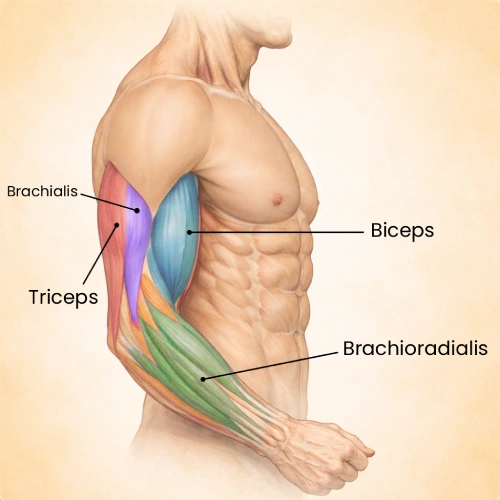
What Muscles Make Up the Arms?
In bodybuilding, the arms are mainly divided into two regions:
- Upper arm muscles
- Biceps brachii – front of the upper arm
- Triceps brachii – back of the upper arm
- Lower arm muscles (forearms)
- Muscles responsible for gripping, wrist movement, and stabilization
Most visible arm size comes from the triceps, even though the biceps often receive more attention.
What the Biceps Actually Do
The biceps are commonly associated with elbow bending, but their role is broader.
Their main functions include:
- Bending the elbow
- Assisting in rotating the forearm
- Helping control shoulder movement in some positions
Because the biceps cross both the elbow and shoulder joints, their involvement changes based on arm position. This explains why different pulling movements feel different in the arms.
What the Triceps Actually Do
The triceps are responsible for extending the elbow, straightening the arm against resistance.
They are heavily involved in:
- Pressing movements
- Stabilizing the elbow during loaded exercises
Anatomically, the triceps make up a larger portion of the upper arm than the biceps. This is why triceps development plays a major role in overall arm size and shape.
How Arm Muscles Work With Larger Muscles
Arm muscles rarely act alone.
During upper body training:
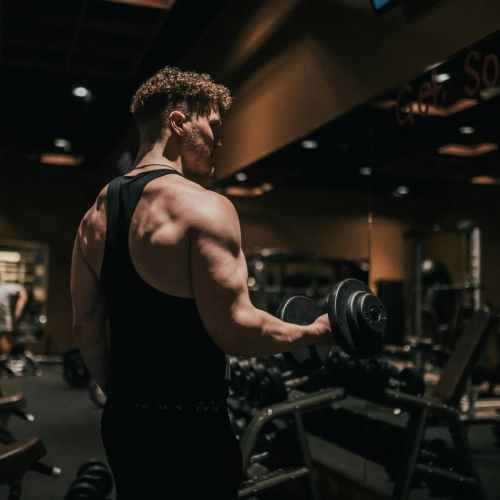
- Biceps assist back muscles in pulling movements
- Triceps assist chest and shoulders in pushing movements
This means arm muscles often receive significant stimulus even when they are not the primary focus. Understanding this overlap helps explain why arm fatigue can appear during non arm specific exercises.
Why Arm Muscles Often Feel Easy to Train
Arm movements are simple from a joint perspective. Elbow bending and straightening are straightforward compared to complex shoulder or hip actions.
This simplicity makes arm exercises feel intuitive, but it can also lead to overemphasis. Anatomy reminds us that arms support larger systems rather than functioning independently.
Forearms and Grip Awareness
Forearm muscles play a crucial role in:
- Grip strength
- Wrist stability
- Transferring force from hands to larger muscles
Forearm fatigue often limits performance in pulling movements before larger muscles reach their limit. This is a structural reality, not a weakness.
Why Arm Anatomy Matters in Bodybuilding
Without understanding arm anatomy, training often becomes repetitive and sensation driven.
Knowing:
- Which muscles bend or extend the elbow
- How arm position changes involvement
- Why arms fatigue during compound movements
creates better awareness and fewer misconceptions.

A Useful Perspective
Instead of asking:
- “Why don’t my arms grow faster?”
A more useful question is:
- “How often are my arms assisting larger movements, and how do they handle that load?”
This shifts focus from isolation to integration.
Arm muscles are simple in structure but important in function.
Understanding how they assist, stabilize, and contribute makes arm training more realistic and less frustrating.If you want, the next logical continuation is Leg Muscles, where anatomy becomes larger, more powerful, and often underestimated.