
Fiber, Digestion & Gut Health
Digestion is rarely discussed in muscle building conversations unless something goes wrong. In reality, how well food is processed influences energy levels, recovery quality, and even training consistency.
This page explains what fiber does, how digestion works, and why gut health matters for performance and adaptation, without giving diet plans or medical advice.
This content is educational, not medical advice.
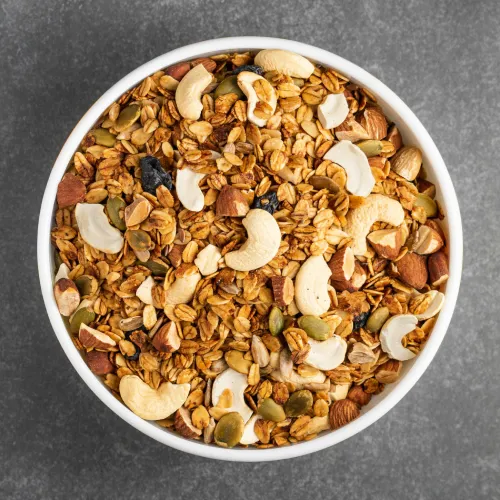
What Fiber Actually Is
Fiber is a type of carbohydrate the human body cannot fully digest.
Instead of being absorbed as energy, fiber:
- Adds structure to food
- Slows digestion
- Feeds gut bacteria
From a biological perspective, fiber shapes how nutrients move through the digestive system, not how many calories are absorbed directly.
Fiber is not fuel for muscles. It is support for the system that delivers fuel.
Digestion as a Performance Process
Digestion is the process of breaking food down so nutrients can enter the bloodstream.
This process influences:
- How stable energy levels feel
- How well nutrients are absorbed
- How comfortable the body feels during training
When digestion is inefficient, even a well designed nutrition strategy can feel ineffective. Energy availability becomes inconsistent, and recovery can feel unpredictable.
Fiber’s Role in Digestive Timing
Fiber slows the movement of food through the gut.
Research suggests this can:
- Improve blood sugar stability
- Support satiety
- Reduce rapid energy swings
For training, this means fiber can influence how steady energy feels across the day, even if it does not directly fuel workouts.
Too little fiber often leads to digestive irregularity. Too much can cause discomfort. Balance matters more than extremes.

Gut Health and Nutrient Absorption
The gut is home to trillions of bacteria that assist with digestion and nutrient processing.
Research shows that a diverse gut environment supports:
- Better breakdown of certain nutrients
- Production of beneficial compounds
- Normal immune and inflammatory responses
Gut health does not build muscle directly. It supports the internal environment that allows training and nutrition to work together smoothly.
Why Digestive Issues Affect Training Quality
Digestive discomfort creates stress.
This stress can:
- Increase fatigue perception
- Reduce appetite consistency
- Interfere with sleep and recovery
Many people attribute flat training sessions to poor motivation or weak programming, when the issue is actually digestive strain.
Understanding digestion helps explain why training quality can fluctuate even when workouts and calories remain unchanged.

Gut Health and Inflammation
The digestive system interacts closely with the immune system.
Research suggests that poor gut function can increase low grade inflammation, which may interfere with recovery and energy levels over time.
This does not mean digestion problems immediately stop muscle growth. It means they can quietly raise the cost of training.
A More Useful Way to Think About Fiber
Instead of asking:
- “Am I eating enough fiber?”
A more useful question is:
- “Does my digestion support consistent energy, recovery, and comfort?”
This reframes fiber as system support, not a number to chase.
Fiber does not increase muscle size.
It supports the internal conditions that allow training and nutrition to work predictably.When digestion works smoothly, effort translates more reliably into progress.
If you want, the next natural continuation is Water Retention & Bloating, where digestion, hydration, and perception often overlap.
Selected Scientific Reading
Only a few references are needed to support these ideas:
Anderson JW et al. (2009). Health benefits of dietary fiber.
https://pubmed.ncbi.nlm.nih.gov/19335713/
Barber TM et al. (2020). The Health Benefits of Dietary Fibre.
https://pubmed.ncbi.nlm.nih.gov/33096647/