
Stress & Cortisol
How pressure reshapes recovery, adaptation, and decision-making
Stress is not inherently harmful. It is a regulatory signal designed to help the body respond to demand. Problems arise when that signal remains elevated without resolution. Cortisol, often labeled negatively, plays a central role in this process. It mobilizes energy, sharpens attention, and coordinates short-term survival responses. Over time, however, persistent elevation changes how the body adapts to training and lifestyle demands.
This article is educational, not medical advice. It explains what cortisol does, how chronic stress alters recovery and performance, and why scientific evidence treats stress as a load that must be managed rather than eliminated.
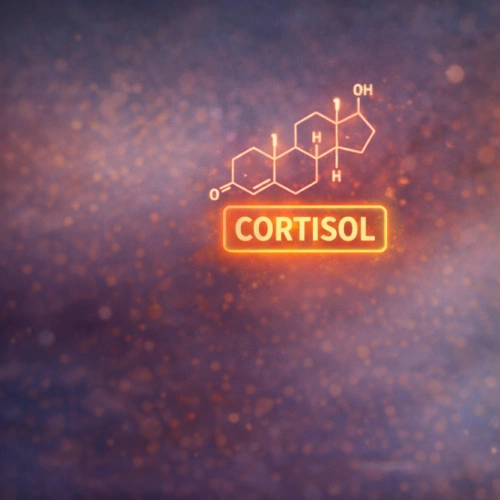
Cortisol as a coordinator, not a villain
Cortisol is a glucocorticoid hormone released by the adrenal glands in response to physical or psychological stress.
Its immediate functions are adaptive. It increases glucose availability, supports blood pressure, and helps the body respond to acute challenges. During training, transient cortisol elevation is normal and expected. It is part of the stress signal that initiates adaptation.
Scientific models emphasize duration and frequency. Short spikes resolve. Prolonged elevation accumulates effects.
When stress becomes chronic load
Chronic stress occurs when demands outpace recovery across days or weeks.
Research shows that sustained cortisol elevation is associated with altered protein metabolism, impaired immune function, and disrupted sleep architecture. In training contexts, this may manifest as slower recovery, persistent soreness, reduced motivation, or increased susceptibility to illness.
Importantly, cortisol does not act alone. It interacts with sleep quality, energy intake, and psychological pressure. The total load matters more than any single source.

Perception amplifies physiological response
Stress is filtered through perception.
Studies in psychophysiology demonstrate that perceived lack of control or unpredictability increases cortisol responses to similar external demands. Two individuals can experience the same workload with different hormonal outcomes depending on cognitive appraisal.
This helps explain why rigid self-pressure or constant self-monitoring can magnify physiological stress without increasing training volume.
Cortisol and muscle adaptation
Cortisol is catabolic in context, not in isolation.
It facilitates protein breakdown to provide energy substrates during stress. When recovery inputs are sufficient, this process is temporary and integrated into adaptation. When stress is continuous and recovery is limited, net protein balance may shift unfavorably.
Evidence suggests that chronic stress does not stop muscle growth outright, but it narrows the margin in which growth occurs. Small inefficiencies compound over time.
Sleep as a stress regulator
Sleep and cortisol are tightly linked.
Normal sleep patterns include a nocturnal decline in cortisol, followed by a morning rise. Sleep restriction or fragmentation disrupts this rhythm, leading to elevated evening cortisol and reduced recovery signaling.
This interaction explains why stress and poor sleep often reinforce each other, creating a feedback loop that affects training tolerance and daily function.
A practical framework for interpretation
Stress is a signal. Cortisol is a messenger.
Problems arise not from the presence of stress, but from unresolved signaling. Scientific evidence supports managing total load across physical, cognitive, and emotional domains rather than attempting to suppress stress responses.
This is educational, not medical advice. Understanding stress as cumulative load aligns more closely with biology than viewing it as an enemy to defeat.

How this fits into lifestyle recovery
When stress remains elevated, daily habits become harder to sustain and recovery windows shrink. Consistent routines and sleep stability often determine whether stress resolves or accumulates.
These interactions are examined further in Daily Habits for Lifters, where recovery capacity is shaped by ordinary behaviors repeated over time.
Scientific Sources
Tsigos C, Kyrou I, Kassi E, Chrousos GP (2016). Stress, Endocrine Physiology and Pathophysiology.
https://pubmed.ncbi.nlm.nih.gov/25905226/
McEwen BS (2007). Physiology and Neurobiology of Stress and Adaptation: Central Role of the Brain.
https://pubmed.ncbi.nlm.nih.gov/17615391/