
Body Fat Percentage Explained
Body fat percentage is one of the most talked-about numbers in bodybuilding, yet it is also one of the most misunderstood. Many people treat it as a score to chase, when in reality it is a descriptive measure that helps explain how body weight is distributed, not how the body functions or performs.
This content explains what body fat percentage represents, why it is often misinterpreted, and how to think about it as an informational tool rather than a target.
This content is educational, not medical advice.
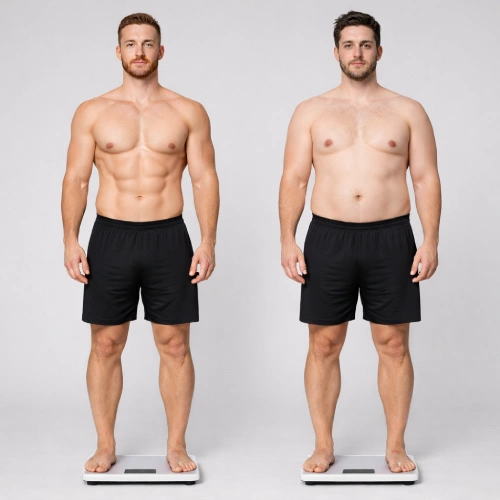
What Body Fat Percentage Actually Describes
Body fat percentage refers to the proportion of total body weight that comes from fat tissue, as opposed to lean mass such as muscle, bone, and organs.
Unlike scale weight, which reflects everything at once, body fat percentage attempts to describe composition. Two individuals with the same body weight can look, move, and perform very differently depending on how that weight is distributed.
This is why body fat percentage is often discussed in bodybuilding contexts, where visual changes matter more than weight alone.
Why the Number Feels More Important Than It Is
Body fat percentage is appealing because it appears precise. A single number seems to promise clarity. In practice, that clarity is limited.
Several factors influence how meaningful the number actually is:
- Measurement methods vary widely
- Daily fluctuations affect readings
- Estimates often differ from true values
Research suggests that common body fat measurement methods are better at tracking trends than providing exact values. The number is most useful when viewed over time, not in isolation.
Visual Change vs Measured Percentage
One of the most common sources of confusion is the gap between how someone looks and what a measurement reports.
Visible definition, muscle separation, and overall appearance are influenced by:
- Fat distribution patterns
- Muscle size and shape
- Hydration and glycogen levels
Because of this, two people with similar body fat percentages may look very different. Body fat percentage helps explain changes, but it does not fully describe them.
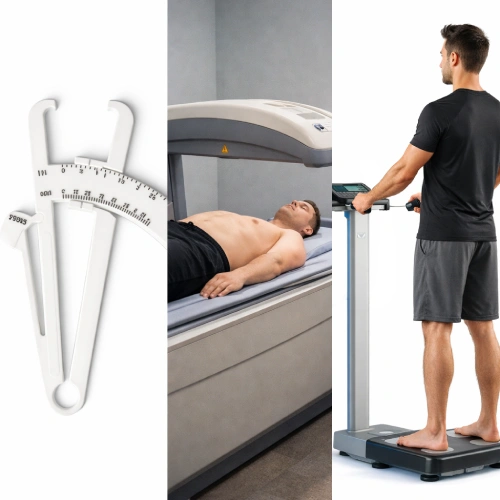
Measurement Methods and Their Limits
There is no single way to measure body fat percentage, and each method carries its own assumptions.
Common approaches include:
- Skinfold measurements
- Bioelectrical impedance
- Imaging-based methods
Scientific evidence shows that all field methods involve estimation. Environmental factors, user technique, and device algorithms can affect results. This is why body fat percentage should be interpreted as an approximation rather than a definitive value.
Why Body Fat Percentage Changes Without Visible Progress
It is possible for body fat percentage to change while appearance remains similar, and vice versa.
This can happen when:
- Lean mass and fat mass change simultaneously
- Water balance shifts
- Measurement error exceeds real change
Understanding this helps prevent overreaction to short-term readings and supports a more stable perspective on progress.
Body Fat Percentage as Context, Not Judgment
In bodybuilding, body fat percentage works best as context. It provides background information that helps interpret other signals, such as strength trends, visual changes, and recovery quality.
When treated as a judgment or goal, it often creates unnecessary stress. When treated as information, it supports clearer decision-making.
Body fat percentage does not define success or failure. It describes one aspect of body composition at a given moment. Understanding its limitations makes it easier to use without becoming dependent on it.
This perspective fits naturally alongside how progress indicators and visual assessment are discussed in Measuring Progress Correctly and Scale Weight vs Mirror.
This content is educational, not medical advice.
Scientific Sources
Gallagher D et al. (2000). Healthy percentage body fat ranges: an approach for developing guidelines based on body mass index
https://pubmed.ncbi.nlm.nih.gov/10966886/