
Range of Motion Explained
Range of motion is often discussed as a technical detail, but it plays a central role in how training stress is created and interpreted. It influences where tension is placed, how joints are loaded, and how consistent a movement can be over time.
Rather than being a rule to follow, range of motion is a variable to understand. Its value depends on context, intent, and the individual performing the movement.
What range of motion actually describes
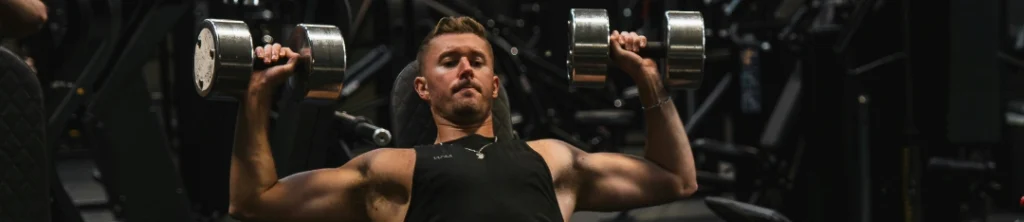
Range of motion refers to how far a joint travels during an exercise. This distance shapes muscle length, leverage, and force production throughout the movement.
A larger range of motion does not automatically mean more effective training. It simply means the joint and surrounding tissues are exposed to stress across a wider set of positions. Whether that exposure is productive depends on control, tolerance, and repeatability.
Lengthened positions and tension
As a muscle lengthens, leverage and internal tension change. In many movements, the most demanding portion occurs when the muscle is closer to its lengthened state. This is often where mechanical stress is highest, but it is also where joint and connective tissue demands increase.
Understanding this helps explain why deeper ranges can feel more challenging without necessarily being more sustainable. The benefit comes from how well that stress can be managed over time, not from depth alone.
Partial ranges and targeted stress
Partial ranges are sometimes viewed as incomplete, but they represent a different way of distributing stress. By limiting joint travel, certain portions of the movement receive more focused loading while others are reduced.
This does not make partial ranges inferior or superior. It means they emphasize a narrower slice of the movement spectrum. When used thoughtfully, they can clarify where tension is being applied rather than dilute it.
Consistency over extremity
From a long-term perspective, the most useful range of motion is often the one that can be repeated with stable mechanics. Small variations in depth can significantly alter joint angles and force paths, which makes progress harder to interpret.
A range that allows consistent execution tends to produce clearer feedback. This clarity often matters more than achieving the deepest possible position in every repetition.
Individual structure and tolerance
Joint structure, limb length, and previous training exposure all influence how a range of motion feels and functions. Two individuals using the same depth may experience very different stress patterns.
For this reason, range of motion is not a universal standard. It is an interaction between anatomy, control, and adaptation rather than a fixed requirement.
Range of motion as a decision, not a rule
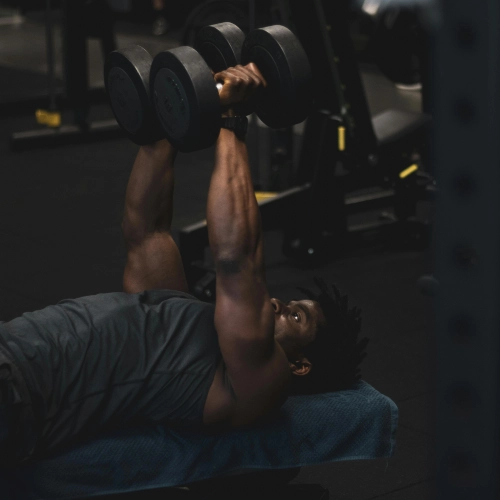
Viewing range of motion as a decision shifts focus away from external benchmarks. The question becomes how a given range shapes stress, fatigue, and repeatability rather than whether it meets a predefined standard.
When understood this way, range of motion becomes a tool for shaping stimulus, not a constraint that must be maximized.
Range of motion influences how exercises feel, how joints are loaded, and how progress is interpreted. It sets the stage for how movement quality emerges under load.
This understanding connects naturally to Tempo and Control, where time and intent shape tension within a chosen range, and to Movement Quality & Biomechanics, where joint angles and leverage further define how that range is expressed.
This article is provided for educational purposes only and should not be interpreted as medical guidance.
Scientific Sources
Schoenfeld BJ et al. (2014). Effects of range of motion on muscle development during resistance training
https://pubmed.ncbi.nlm.nih.gov/24714538/
McMahon GE et al. (2014). Muscular adaptations to resistance training are specific to the range of motion used
https://pubmed.ncbi.nlm.nih.gov/24985503/